


Overview
- Tech Foundry provides 3D scanning, reverse engineering, motion capture, and gait analysis services for researchers, students, startups, and industry partners.
- Using a combination of handheld and benchtop scanning technologies, we can digitize physical objects, develop parametric CAD models from existing parts, and capture movement data for research and analysis applications.
- Whether you need to replicate an obsolete component, create a custom-fit design, or analyze human motion, our team can help transform physical data into actionable digital assets.
3D Scanning
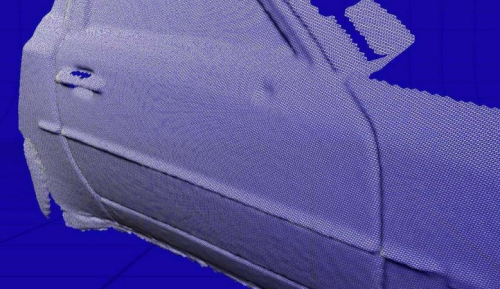
3D Scanning can be used to create a digital 3D representation of an existing physical object at an accuracy of ~50-100 microns. The digital models can be used for graphic visualization, reverse engineering, replication, and designing surrounding parts or assemblies.
Output
Our standard deliverable is an STL mesh file. STL files represent an object's surface using a collection of interconnected triangles and are commonly used for visualization, inspection, and 3D printing workflows. If you desire a Parametric model derived from the scan data, we can assist with this procedure as well (at additional cost). Examples of parametric model formats include Solidworks, Autodesk Inventor, or STEP file formats.

Tech Foundry Hardware
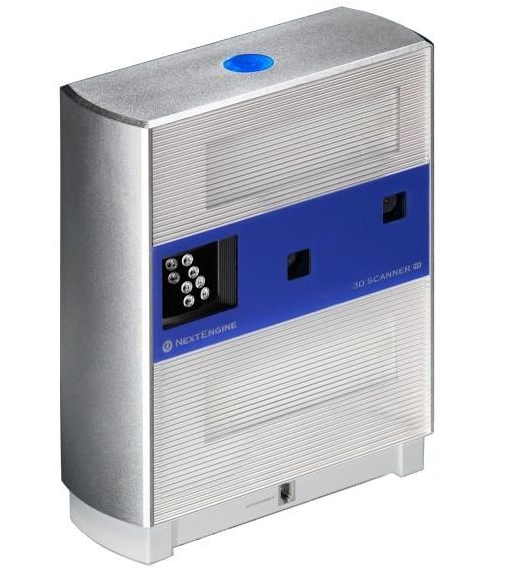
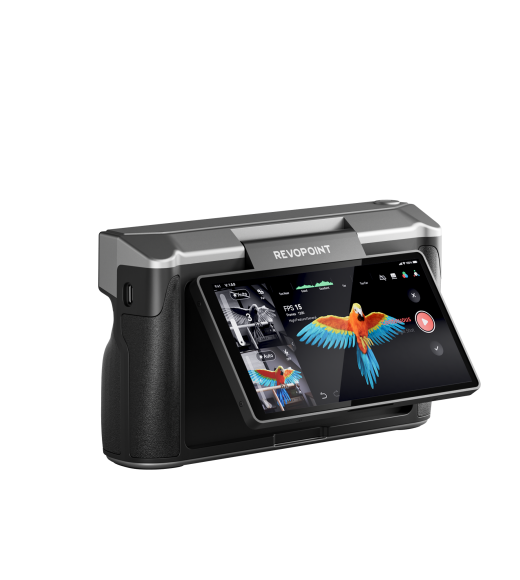
Tech Foundry is armed with an assortment of different types of 3D scanners (handheld, and bench-top). We are able to capture data in-lab, or on-site.
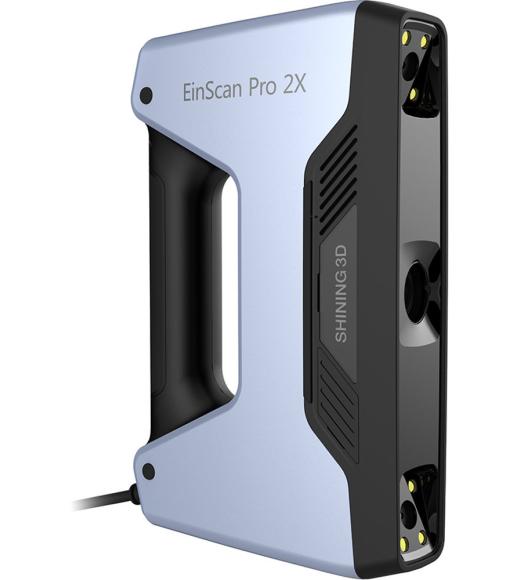

Pros:
- Handheld
- High Definition
Pros:
- Scanning-stage automates data-capture process
- Highest Definition
- Good at processing small objects with fine details
Pros:
- Handheld
- Extremely Compact
- Intuitive
Pros:
- Highest accuracy of our handheld scanners
- Scans dark and shiny surfaces without spray (in most cases)
- Wireless — no tethering required
- Turntable-compatible for automated small-object capture
Cons:
- Necessitates computer to manage and store incoming data (provided by Tech Foundry).
- May struggle to capture small objects
Cons:
- Slow compared to other scanning solutions
Cons:
- Lower scanning resolution than other solutions
- May struggle to capture small objects
Cons:
- Requires a computer to manage and store scan data (provided by Tech Foundry)
- Steeper learning curve than other handheld options
- Not recommended for scanning faces or people
- Best suited for small-to-medium objects
Keyence VR-6000 Wide-Area Optical Profilometer

- Type: Benchtop optical profilometer
- Scan Area: 100 × 72 mm (single shot); expandable via stitching
- Resolution: 0.1 µm (height), 1 µm (X-Y)
- Scan Speed: Full surface capture in as little as 1 second
Units: 1
Location(s): Aggie Square (Sacramento)
Pros:
- Captures full surface data in as little as 1 second
- Measures glossy, matte, and reflective surfaces without spray coating
- Motorized rotation captures recessed features and undercuts
- Extremely high resolution for fine surface detail
Cons:
- Benchtop only — objects must be brought to the scanner
- Limited to small objects that fit on the measurement stage
- Outputs surface profile data, not a full 3D mesh like other scanners
- Not suited for large or irregularly shaped objects
Example Scan Data


Scanner Compatibility
Generally, our 3D scanners work by emitting structured light (visible, or non-visible) and studying the reflected light that bounces back. As such, objects are ideally opaque, with no hidden/interior features in order to capture a clean-scan. In instances where your object is translucent or reflective, we ca n apply a temporary spray coating (which evaporates off after a few hours) to make your part compatible with our process.
NOTE: These scenarios may present challenges for optical 3D scanning:
- Glossy, or metallic surfaces, or red-colored objects – light tends to reflect off of these surfaces, making them challenging for the optical scanners. One potential work-around would be to temporarily clad the object in a temporary coating that is more amenable to scanning (coating naturally evaporates off after several hours).
- “Soft” objects, that distort while being moved, or living objects – if the object changes shape, or moves during scanning, the scanner’s software may struggle to stitch multiple angles together.
- Objects with internal features, or deeply recessed features
Ideal Scale
Ideal objects for 3D scanning range from a minimum of a few centimeters in length to a maximum size roughly equivalent to an automobile.
Reverse Engineering
Often related to, or incorporating elements of 3D scanning, our reverse engineering service utilizes skilled engineers to develop parametric models from existing physical parts. This process is particularly valuable when replacement parts are no longer commercially available or when new designs must be derived from or replace existing objects. We provide accurate digital models to support redesign, modification, or replication efforts.

Note
- With decades of engineering design expertise, we approach reverse-engineered models with the same mindset as the original engineer, ensuring that our models faithfully reflect the original design intent
Data Capture: Motion Capture & Gait Analysis
Tech Foundry is equipped to perform motion capture and gait analysis. We recommend using iPi Soft Motion Capture software with two Microsoft Kinect 2 sensors, which can be enhanced by adding additional cameras for improved capabilities.
Tech Foundry Hardware and Software
Our motion-capture system uses two Microsoft Kinect2 sensors, webcams, and scene reconstruction/analysis software. These tools primarily capture an object’s geometry or analyze gait and movement. The Kinect2 sensors employ an array of technologies, including time-of-flight sensors and cameras, to gather data.
Rates
- Note: We strongly recommend submitting a service request to obtain an accurate project cost estimate. Self-quoting can often lead to miscalculations
Our development services come with a simple per-hour rate defined in the chart below. We assess a 1 hour minimum, then to the nearest quarter hour. If your process involves use of our 3D scanning technologies, we also access an hourly fee for use.
| Description | Internal | External | |
| Professional Engineer Development Time | Design time, machine setup, etc. | $119/hour | $160/hour |
| Student Development Time* | Design time, machine setup, etc. | $30/hour | $40/hour |
| Scanner Use | Hourly rate for machine use | $6/hour | $8/hour |
*Student development time may not be available, or applicable to all projects. Tech Foundry will leverage it where possible.
Estimating project cost should be left to Tech Foundry, but here are some general project estimates that can guide in self-estimating:
| Relative Project Scale | Development Hours | Development Expenses*, ** |
| Simple Scan, No Mesh Repair | 1 Hours | $30-$119 |
| Simple Scan, Simple Mesh Repair | 1.5-3 Hours | $100-$150 |
| Scan with Mesh Repair | 3-5 Hours | $150-350 |
| Scan with Advanced Mesh Repair or Augmentation | 5+ Hours | $350+ |
*All declared values at internal rates, NUD = university required "Non-University Differential" added for external.
Get Started
- Heard enough? Get started with a service request! Your request need-not be perfect, we can always revise it as we go. Just provide us with as much detail as is necessary.
- Feeling overwhelmed with the options? We don't blame you! We do a lot! Feel free to email us to set up a consultation. We're happy to chat via zoom, or in person (where we can review samples).