


Overview
- PolyJet 3D printing is a versatile but expensive technology that creates parts by jetting and curing liquid photopolymer layers, offering high-resolution prints with smooth surfaces. This method excels at producing multi-material and multi-color prototypes with complex geometries. If your application is low-strength and requires fine detail or varied material properties, PolyJet could be an excellent choice.
- Tech Foundry operates two Stratasys J5-series PolyJet printers purpose-built for medical, anatomical, and clinical research applications: the J5 MediJet and the J5 Digital Anatomy. Both share the same compact platform, rotating print tray, and multi-material capability — but are configured with distinct material portfolios for different use cases.
- When requesting J5 printing services, there's no need to specify which printer to use. Our Tech Foundry staff will assign the most appropriate system for your project. The technical details below are provided for your reference.
Tech Foundry Hardware
Stratasys J5 MediJet Printer

Build Volume: 140 × 200 × 190 mm (5.51 × 7.87 × 7.48 in.)
Layer Thickness: Down to 18 microns (18.75 µm)
Max Simultaneous Materials: 5
Color Capability: Full color — 500,000+ combinations, Pantone-validated
Dimensional Accuracy: ±0.3% (minimum ±0.3 mm)
Support Material: SUP710S (WaterJet removable) or WSS150 (water-soluble)
Medical Imaging Compatibility: Supports patient-specific models and surgical guides generated from CT and MRI scan data.
Units: 1
Location(s): Aggie Square (Sacramento)
Unique Properties
- Biocompatible and sterilizable materials (MED610, MED Digital ABS Plus™) certified for patient-contact and sterile-field use
- Rotating print tray continuously repositions during printing, improving surface finish uniformity across all faces
- DICOM-compatible workflow — import CT/MRI scan data directly for patient-specific model fabrication
Build Materials:
Body Materials
Vero Color Materials
- Rigid photopolymers used to produce realistic full-color prototypes, anatomical models, and visual presentation parts.
VeroUltra Clear S
- Transparent material used for fluid-flow visualization, internal feature inspection, light-transmission studies, and clear anatomical models.
Elastico
- Flexible rubber-like material available in multiple Shore A values for seals, gaskets, grips, overmolds, and soft-touch product simulations.
DraftWhite
- High-speed white material designed for rapid concept models, design reviews, and form-and-fit evaluations where turnaround time is a priority.
Bio-compatible Materials
MED610
- Biocompatible and sterilizable rigid material commonly used for surgical guides, anatomical models, dental applications, and other patient-contact devices requiring regulatory compliance.
Digital ABS / Digital ABS Plus
- Durable engineering-grade material that simulates the strength and toughness of ABS plastic. Well suited for functional prototypes, snap-fit components, housings, and medical device testing.
Support Materials
SUP710S
- WaterJet-removable support material used during printing to support overhangs, cavities, and complex geometries.
WSS150
- Water-soluble support material that dissolves away from enclosed channels and intricate internal features that are difficult to access mechanically.
Note: Additional PolyJet material combinations and digital materials may be available upon request. Contact Tech Foundry staff to discuss specialized material requirements for your application.
Stratasys J5 Digital Anatomy Printer

Build Volume: 140 × 200 × 190 mm (5.51 × 7.87 × 7.48 in.)
Layer Thickness: Down to 18 microns (18.75 µm)
Max Simultaneous Materials: 5
Color Capability: Full color — 500,000+ combinations
Dimensional Accuracy: ±0.3% (minimum ±0.3 mm)
Support Material: SUP710S (WaterJet removable)
Medical Imaging Compatibility: Supports CT and MRI-based anatomical models with preconfigured tissue simulation workflows.
Units: 1
Location(s): Aggie Square (Sacramento)
Unique Properties:
- Purpose-built Digital Anatomy materials replicate the tactile feel and mechanical response of real human tissue — not just appearance.
- Hundreds of validated anatomical tissue presets available via GrabCAD Anatomy; direct DICOM import from CT/MRI.
- Validated by leading clinical partners including Medtronic, Jacobs Institute, Pavia University, and Technion Institute.
Additional Build Materials Available with Digital Anatomy:
The following materials are available in addition to the materials listed for the J5 MediJet above.
BoneMatrix™
- Simulates cortical and cancellous bone — used for surgical drilling, cutting guide testing, and orthopedic device validation.
GelMatrix™
- Replicates soft tissue, organs, and brain matter with realistic deformation and cutting response.
TissueMatrix™
- Mimics the elastic properties of soft tissue, skin, and vessel walls for vascular and cardiac simulation models.
Additional materials not listed, such as RadioMatrix™, available upon request.
Note: Digital Anatomy materials are not biocompatible or sterilizable. These printers are intended for simulation, training, education, and device testing — not patient-contact or sterile-field use.
Disclaimer:
The Stratasys J5 Digital Anatomy 3D Printer was funded by the National Institutes of Health Office of the Director (Award No. 1S15OD039782-01). Research publications resulting from use of this instrument must acknowledge this award. Please use the following language in your Acknowledgments section:
"The Stratasys J5 Digital Anatomy 3D Printer used in this study is supported by the National Institutes of Health Office of the Director under Award Number 1S15OD039782-01, awarded to the Translating Engineering Advances to Medicine (TEAM) Lab, University of California, Davis."
Comparison to Other Printing Technologies
Contrasted with FDM
PolyJet offers higher resolution, smoother surface finishes, and supports blended multi-material printing, unlike FDM. However, PolyJet parts are generally less durable and far more expensive. While FDM excels in strength and cost-effectiveness for functional prototypes, PolyJet is better suited for detailed visual models or parts requiring complex geometries and varied material properties.
Contrasted with Reinforced FDM
Reinforced FDM provides superior mechanical strength compared to PolyJet but lacks the ability to print with multiple materials or colors. PolyJet is ideal for producing complex designs with different textures or visual features, but it cannot match the enhanced stiffness and durability of reinforced FDM parts. These platforms are similar in cost, only.
Contrasted with SLA or MSLA (Resin Printing)
PolyJet offers the unique ability to print multi-material parts, but SLA/MSLA parts often outperform PolyJet in mechanical strength. SLA/MSLA-based methods also tend to be more cost-effective for single-material, high-detail applications, especially for functional parts requiring sterilization or use in medical applications.
Contrasted with DLP (Microfluidic Printing)
While both PolyJet and DLP can produce high-resolution parts with smooth finishes, DLP is specifically tuned for microfluidic applications, offering better clarity and precision for such purposes. PolyJet, with its multi-material capabilities, is more versatile but not as specialized for these fine-tuned, high-precision applications.
Contrasted with Multi Jet Fusion (MJF)
MJF produces strong, isotropic nylon parts optimized for functional and production use. The J5 platforms are purpose-built for detailed medical models and tissue simulation where material realism and fine resolution matter more than mechanical strength.
Examples:


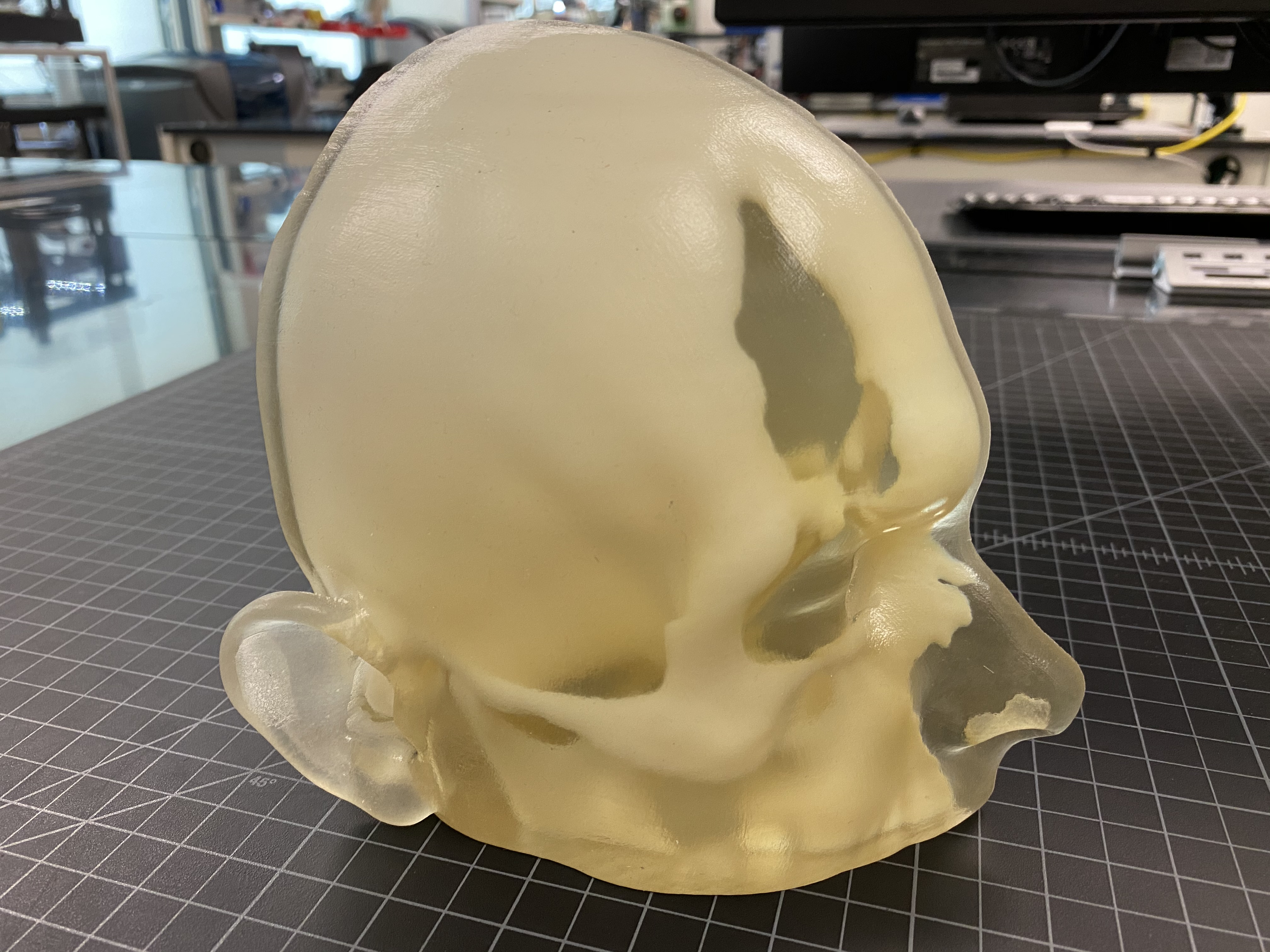
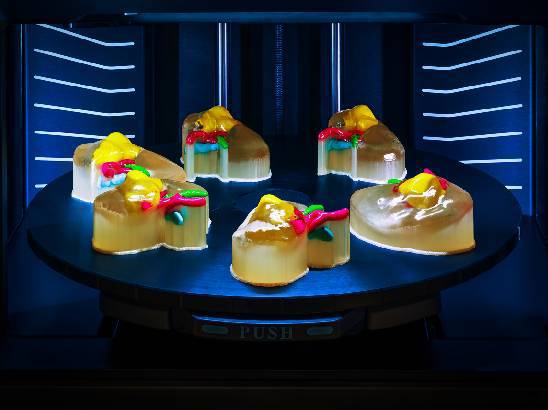
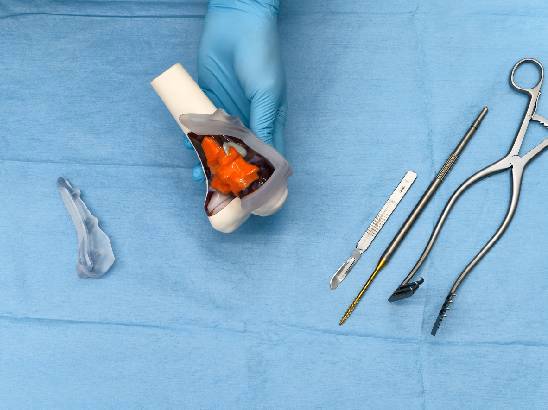

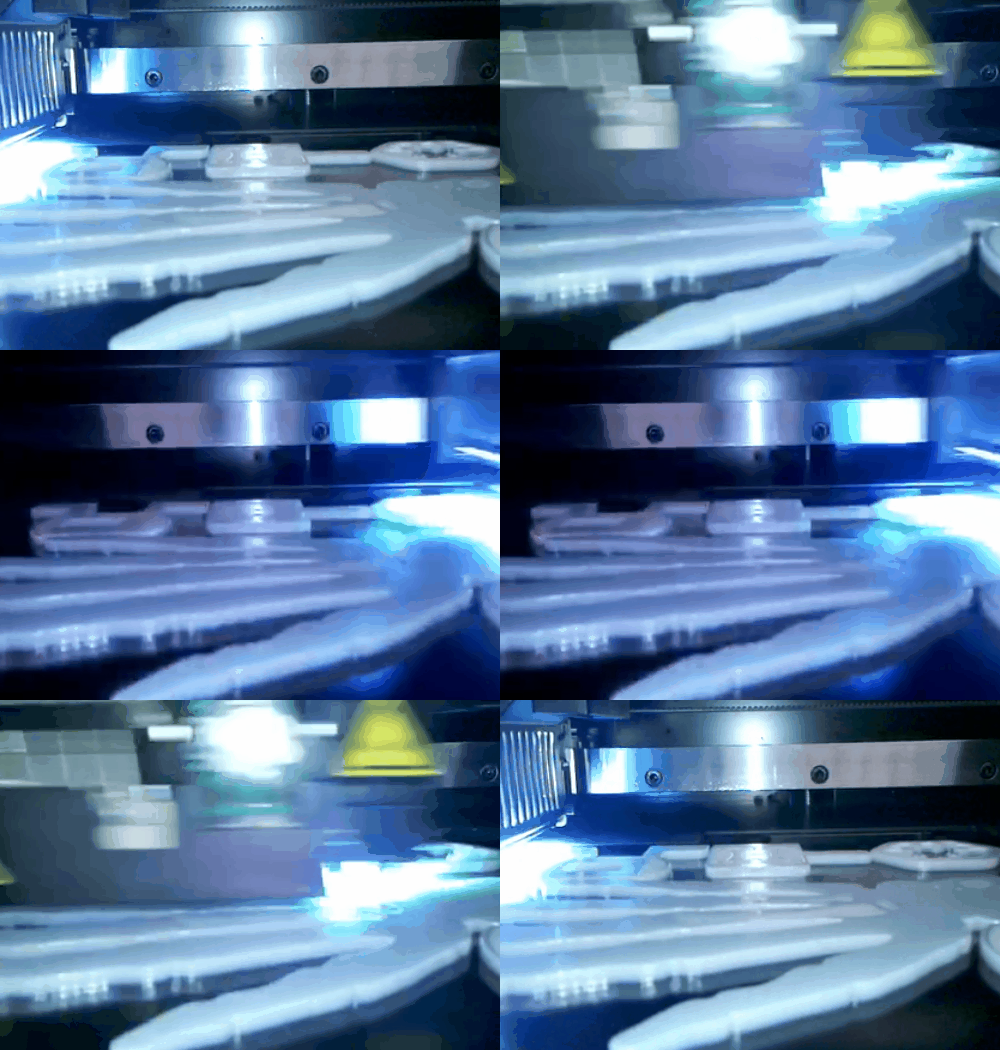
Polyjet Printing Gallery
Click here to view more example polyjet prints.
Rates
- Note: We strongly recommend submitting a service request to obtain an accurate project cost estimate. Self-quoting can often lead to miscalculations
- Already have a quote from another vendor? Share it with us and we'll match or beat it.
We bill for time and materials while using our Polyjet printers. For time, we assess 1 hour of assisted time per-print tray plus an hourly rate for machine use. Maximizing tray capacity with your parts—whether identical or varied—significantly reduces per-unit part cost.
| Description | Internal | External | |
| Support Materials | Per-gram expense for support materials (SUP705) | $0.20/ml | $0.30/ml |
| Build Materials | Per-gram expense for build materials in-stock (Vero, Tango, MED610) | $0.60/ml | $0.80/ml |
| Setup and Processing | 1 hours of our assisted rate ($119/hour) per build (not object) | $119/build | $160/build |
| Hourly Use Rate | Expense per hour of machine use | $11/hour | $14/hour |
Estimating project cost should be left to Tech Foundry staff, but here are some general project estimates that can guide in self-estimating:
| Relative Project Scale | Cost for First Batch of Parts, Typical Range | Cost for Additional Batch of Parts, Typical Range |
| Small | $120 | $15-$30 |
| Medium | $120-$200 | $30-$150 |
| Large | $200-$500 | $150-$350 |
| Extra Large | $500+ | $350+ |
*All declared values at internal rates, NUD = university required "Non-University Differential" added for external.
Preparing Files for Printing:
The Tech Foundry team suggests two sets of files for each 3D printed part (where possible) – the original parametric model file (Solidworks/Inventor/Fusion360/etc), and a millimeter scale STL file (point-mesh file). Please include these files on your project request if possible.
For multi-material prints, we require one STL file for each material in a shared coordinate system. Please work with Tech Foundry staff to ensure this constraint is satisfied.
Technical Details
PolyJet printing is a 3D deposition process similar to traditional 2D inkjet printing, but instead of ink, it jets UV-curable liquid resin onto a build platform, where it solidifies immediately upon exposure to UV light. This process is repeated layer by layer. After printing, a gel-like support structure is removed using high-pressure water.
With layer sizes around 22 microns, PolyJet offers precision far exceeding FDM and slightly surpassing SLA in accuracy. However, this precision comes at the cost of weaker and more expensive materials.
The use of dedicated support structures enables “printed assemblies,” where multiple components are printed together, held in place by the support material, and separated after cleaning. For example, the planetary gears shown below were printed as a single unit with support material isolating each component, eliminating the need for post-print assembly.

Our PolyJet printer supports multi-material printing, allowing two distinct materials to be combined in precise ratios for customized properties. For instance, a rigid polymer can be paired with a flexible polymer in the same part, enabling different areas to have varied mechanical characteristics. These materials can also be blended to create intermediate properties, such as adjusting stiffness by using different material ratios. This same technique can be applied to opaque and translucent materials, giving control over optical properties, like transparency and light diffusion.

Expanded Materials Description:
The materials this printing technology uses are all proprietary, with most being either acrylic, or vinyl derived.
The materials that we make most frequent use of are as follows:
Vero+: Rigid acrylic derived polymer, comes in white (stocked, VeroWhite+) or black (not typically stocked, VeroBlack+)

Tango+: Flexible vinyl “rubber like” polymer, comes in translucent amber (Tango+) or black (TangoBlack+).

Gray60: Gray/Blue colored hybridized mixture between Vero, and Tango materials. Slightly enhanced impact strength, slightly less brittle than Vero alone. True Grey60 is a mixture between VeroWhite+ and TangoBlack+, but we often use VeroWhite+ and Tango+ to achieve the same mechanical properties in a White colored print.
Digital Materials: Mixture of Vero and Tango class materials, typically specified in shore hardness when soft enough to become flexible. Contact lab staff for details on available ratios.

MED610: Rigid translucent (which can become clear when polished) material. Described as: “ideal for applications requiring prolonged skin contact of more than 30 days and short-term mucosal-membrane contact of up to 24 hours. Bio-compatible material has five medical approvals including cytotoxicity, genotoxicity, delayed type hypersensitivity, irritation and USP plastic class VI.”

Designing for Polyjet Printing:
Tech Foundry requires two sets of files for each 3D printed part – the original parametric model file (Solidworks/Inventor/Fusion360/etc), and a millimeter scale STL file (point-mesh file)
Clearance between assemblies, General Fit and Finish
When printing assemblies in a fully assembled state, the minimum suggested clearance (gap) between two faces (to prevent accidental bonding, and permit cleaning) is 0.3mm.
Some finishing (sanding) may be required on high-precision faces, or in cases where a very smooth finish is required/desired.
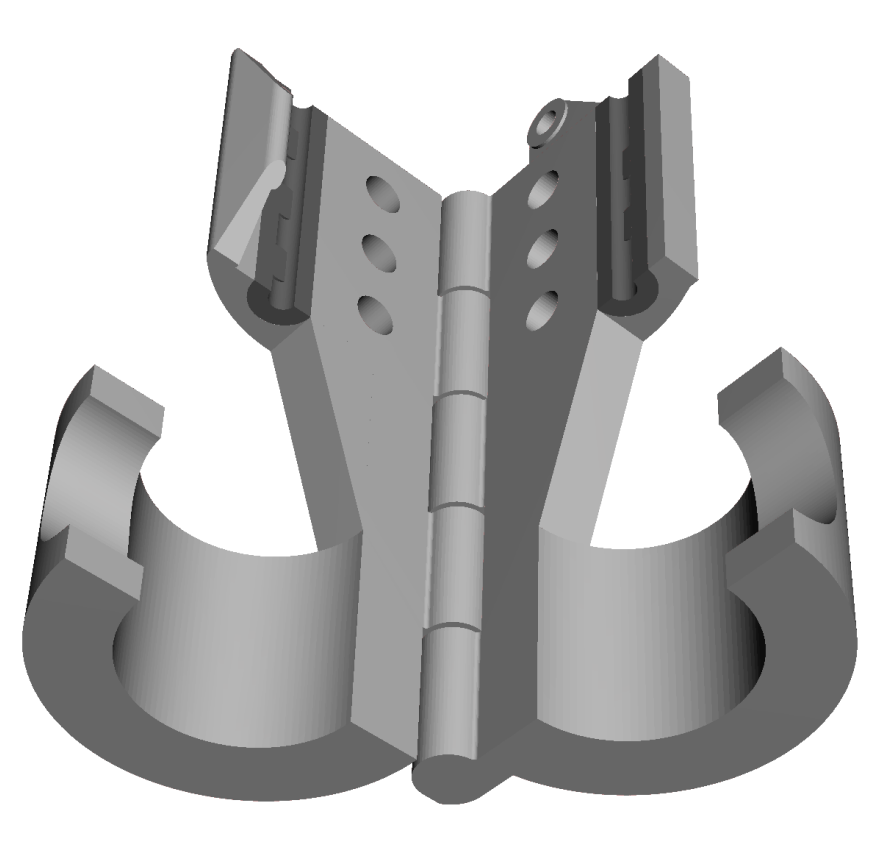
Wall Thickness
The minimum suggested wall-thickness for polyjet prints is equal to 0.3mm. Further, for free-standing features, it’s advised to limit the height-to-width ratio to less than 5:1 (for features less than 1mm in scale)

Support Structure
Note that all prints will require support structure along the underside of the print, and where overhangs are present.
If a print has an internal cavity that is inaccessible from an outside face, that cavity will be filled with support structure that cannot be removed. If this is an issue, consider splitting the part such that the support can be removed, and bonding together afterwards (if necessary).

Finish (Glossy Vs Matte)
The printer operates in two modes that ultimately influence surface finish:
“Matte” Finish Mode (default): The entire part is encapsulated in support material for a consistent nonreflective finish. These prints are generally more accurate (as the support material acts to stabilize the geometry). However, residual support material may take some gentle scrubbing to fully release (else the surface of the print may feel “soft”) when picked at.
“Glossy” Finish Mode: The print is only exposed to support structure where absolutely mandatory. This mode presents a smooth shiny finish on upward faces, but will appear different (“matte” finish) where support material is required (underside and overhangs)
Multi-material Prints
In cases where multiple materials are desired on a single print, multiple STL files must be supplied; specifically, at least one file per material type must be supplied. Further, each file must share the same coordinate system so that parts are properly registered in the printer’s deposition software.

Get Started
- Heard enough? Get started with a service request! Your request need-not be perfect, we can always revise it as we go. Just provide us with as much detail as is necessary.
- Feeling overwhelmed with the options? We don't blame you! We do a lot! Feel free to email us to set up a consultation. We're happy to chat via zoom, or in person (where we can review samples).